

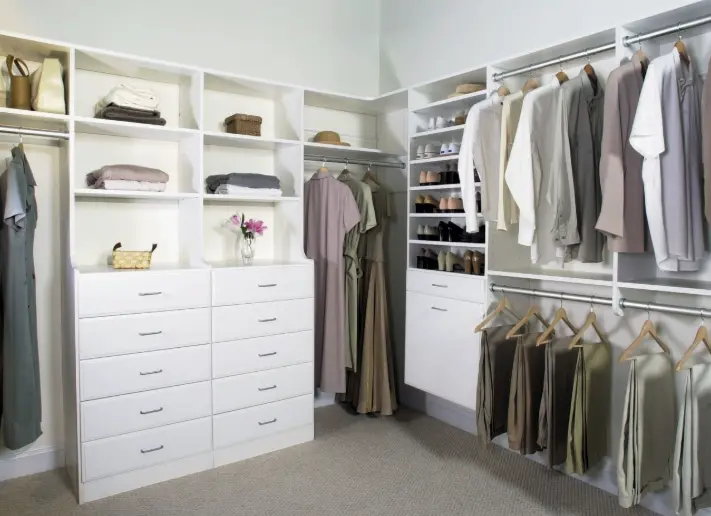
Create a Smarter Closet Plan Before Investing in Custom Cabinets
A cluttered closet doesn’t happen overnight, it builds up when storage isn’t planned properly.
Before you spend money on custom closet cabinets, the most important step is understanding how your storage should actually work. Without a clear plan, even expensive cabinetry can fail to solve the real problem: lack of functional organization.
At American Icon, we help homeowners design smarter closet systems that combine function, space efficiency, and long-term usability. This guide covers the best closet storage solutions you should consider before buying cabinets, so you can avoid costly mistakes and maximize every inch of your space.
Why Closet Storage Planning Matters First
Most homeowners think cabinets are the solution, but in reality, cabinets are just the structure. The real success comes from how you organize your belongings inside that structure.
Proper planning helps you:
- Maximize every inch of available space
- Avoid overpaying for unnecessary cabinet features
- Improve daily accessibility and workflow
- Reduce long-term clutter buildup
- Create a system tailored to your lifestyle
In modern homes where space is limited, smart storage planning is no longer optional—it’s essential.
1. Start With Decluttering Before Any Design
Before thinking about shelves or cabinets, you need to reduce what you actually store.
Ask yourself:
- What do I wear regularly?
- What hasn’t been used in over a year?
- What items no longer fit my lifestyle?
A smaller, intentional wardrobe allows for a cleaner and more efficient closet design. Without decluttering first, even the best cabinetry becomes overcrowded.
2. Design Storage Based on Your Lifestyle, Not Trends
One of the biggest mistakes homeowners make is copying Pinterest-style closets without considering real usage.
Instead, plan based on:
- Daily work clothing vs casual wear
- Seasonal rotation needs
- Accessories and shoes quantity
- Shared vs individual storage
Your closet should fit your routine, not social media inspiration.
3. Use Vertical Space Before Adding Cabinets
Most closets waste up to 40% of usable vertical space.
Before finalizing cabinet layouts, consider:
- Double-hanging rods for shirts and pants
- Tall shelving for seasonal storage
- Overhead storage for luggage or boxes
Vertical planning often reduces the need for oversized cabinetry, saving cost and improving efficiency.
4. Plan Dedicated Zones for Different Items
A well-designed closet is divided into functional zones.
Recommended zones include:
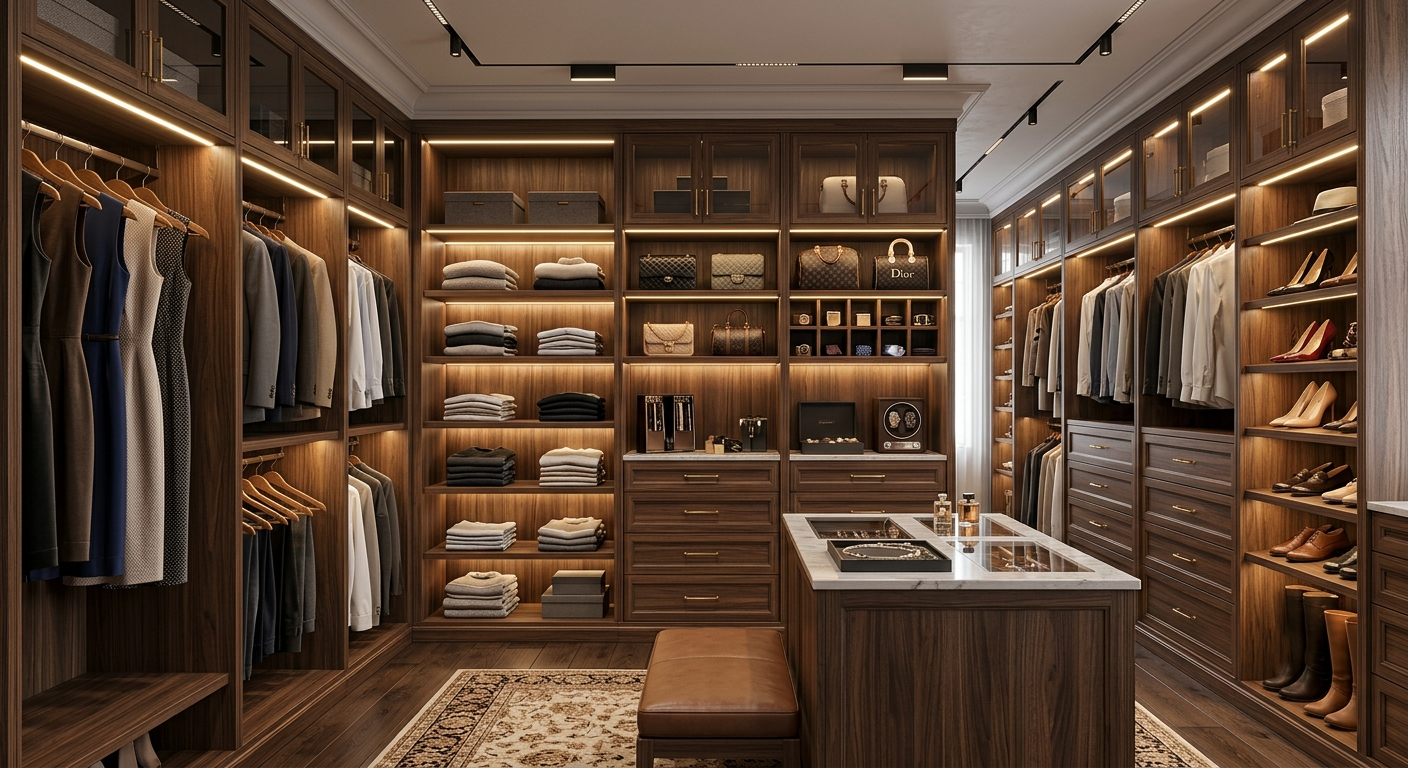
- Hanging clothing zone (daily use)
- Folded clothing shelves
- Shoe storage section
- Accessories and small items area
Zoning prevents clutter and makes everything easier to find without searching.
5. Decide Between Open vs Closed Storage Early
This decision directly impacts your cabinet design.
Open storage:
- Faster access
- Visual organization
- Better for daily-use items
Closed cabinets:
- Cleaner appearance
- Hides clutter
- Ideal for seasonal or less-used items
Most modern closets use a hybrid system for balance.
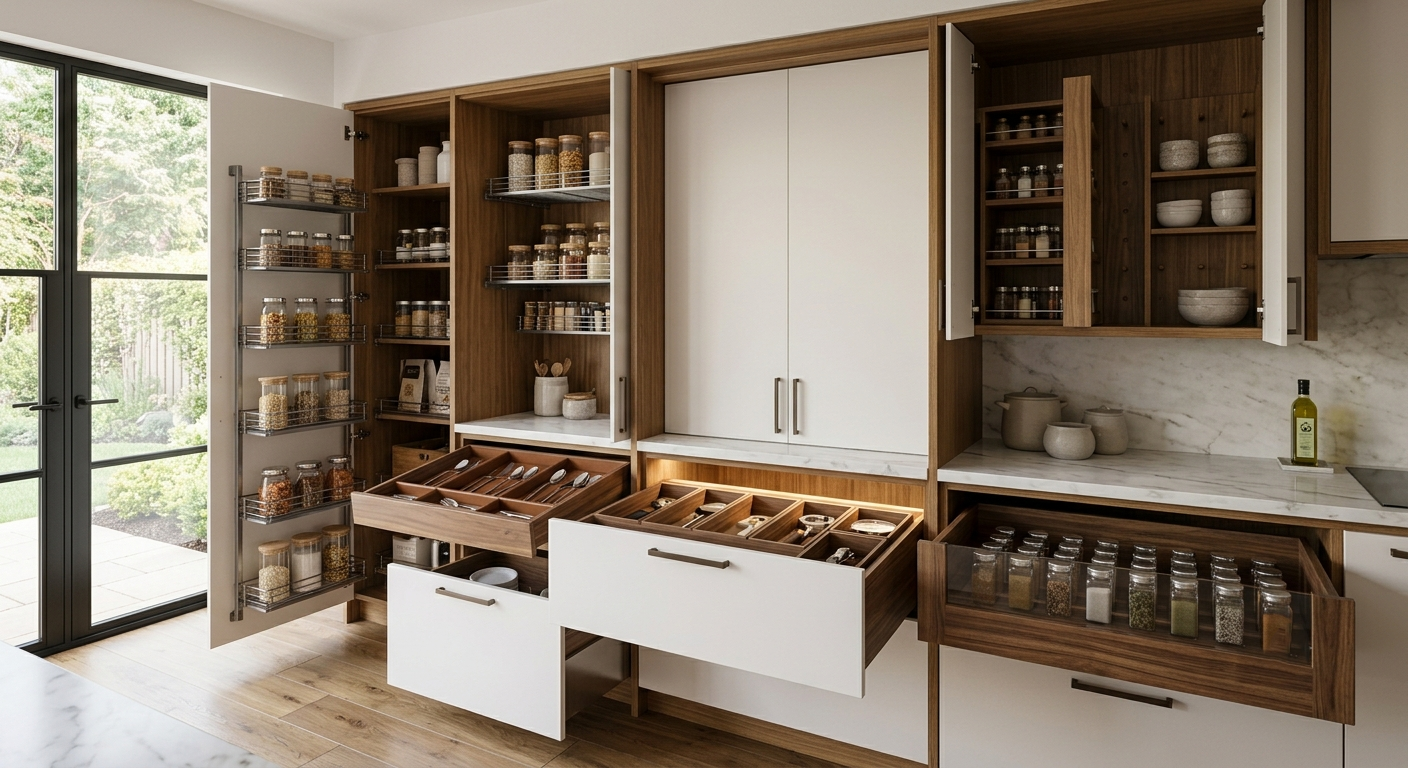
6. Plan for Smart Drawer and Insert Systems
Before buying cabinets, think about internal organization features.
Consider adding:
- Drawer dividers for clothing separation
- Jewelry trays and accessory inserts
- Folded clothing compartments
- Hidden storage sections
These systems reduce clutter even if your closet is small.
7. Optimize Shoe Storage Strategically
Shoes often become the most space-consuming part of a closet.
Instead of leaving this for later, plan it early:
- Angled shoe shelves for visibility
- Pull-out shoe racks for accessibility
- Stackable shoe storage for space saving
- Dedicated shoe cabinet zones
Proper shoe planning alone can dramatically improve closet efficiency.
8. Incorporate Lighting Into the Storage Plan
Lighting is often ignored until installation, but it should be part of the design stage.
Good lighting improves:
- Visibility of stored items
- Perception of space
- Daily usability
Popular options include:
- LED strip lighting under shelves
- Motion sensor lights
- Overhead recessed lighting
A well-lit closet feels bigger, cleaner, and more premium.
The Real Secret: Cabinets Should Follow Storage Strategy
Most people design closets backwards; they pick cabinets first and figure out storage later.
The correct approach is:
Storage plan → Layout design → Cabinet selection → Installation
When you reverse this process, you end up with wasted space and poor usability.
At American Icon, we design closet systems that start with real-life storage needs—not generic cabinet templates.
Final Thoughts
Before investing in closet cabinets, the smartest move is to understand how your storage should function.
A well-planned closet isn’t just about appearance; it’s about daily convenience, long-term organization, and maximizing every inch of space.
By applying these storage-first strategies, you’ll avoid costly design mistakes and create a closet that truly works for your lifestyle.
If you’re planning a custom closet upgrade, American Icon helps you design storage systems that are practical, efficient, and built around how you actually live, not just how they look.
